Wednesday, June 15, 2005

Telling the Story

We have enjoyed two days of ministry in Uganda. The Pastors' Conference has gone well. As I prepared for this trip I read through my journal of the days I spent here in 2002. One of my struggles then was the lack of a sense of connection to the pastors I was teaching. Part of that was language. I could not say anything in their vernacular, and some of them did not speak English. Part of it was situational. The conference was in Busheyni, an hour's drive from Mbarara, where we were staying with the Peppers. So every day we had to drive to the conference and our schedule required us to leave as soon as it was over in order to be ready for the evening activities. I'm sure other factors entered in as well. But I felt disconnected.

These last two days have been different. The conference is held at Larry's church, University Baptist Church, only a few minutes from his home. I have been able to spend more time with them. More of the pastors speak English this time, and as I talk I can see their responses. I am able to be present for their worship time, which is only to be experienced and not described. And, I'm sure, that having been here before has readied me in ways that could not have been there before.

On Tuesday we studied about the nature of God's Word as both human and divine. In the first session we talked about the inspiration of Scripture and its authoritative claim on our lives. In the second session we talked about the human dimensions of the Bible and the need for us to be faithful interpreters of its meaning. The pastors engaged the discussion enthusiastically. I could not stay for lunch with them that day, because I promised them I would prepare some written materials on the subject that could be distributed to them. They applauded. Literally. So I came home and worked on the handouts in the afternoon.

Melinda, Jenna, and Pamm joined two teams of the Words of Hope ministry of UBC and went to the villages to visit in the homes of AIDS patients. Finding the people, and finding them at home was a challenge. With no phones and no addresses visiting a specific person is difficult. But in each case they found someone to visit, although the effort required nearly four hours. They spend an hour to an hour and a half with the patients, listening to their needs, sharing Scripture, checking on their medications, and praying for them. I want to write more about the HIV/AIDS situation in Africa later, perhaps tomorrow.

On Tuesday evening we once more had guests for dinner. This time it was Skip and Kirk, two missionaries who work with World Venture, the missionary arm of Conservative Baptists. They have come to Mbarara for the Pastors' Conference because they work with Baptist pastors in leadership training in another part of the country. We enjoyed another evening of story-telling, heart-sharing, and laughter. They do a lot of that around here.

Wednesday I taught a practical method of Bible study, involving "the PRESS method" (Pray for Guidance, Read the Passage, Examine the Text, Say it back to God, Share it with Others). I encouraged them to examine the biblical text they are studying much like Dr. Pepper examines his patients -- ask lots of questions, observe everything you can, decide what it all means, and determine a course of action. I taught them how to use the "SPACE Questions" as a means of applying the text to their lives (Sin to Confess? Promise to Believe? Action to Avoid? Commandment to Obey? Example to Follow?) and to ask theological questions: What does the passage teach about God? About humanity? About sin? About redemption. Again, these pastors were eager to think and talk about the work of biblical interpretation. Today I'll be teaching about the use of the Bible in their own spiritual formation.

Alyso is the "regional pastor." He serves as the pastor of a congregation about two hours from here, but also is a kind of mentor to younger pastors. He is a wise man who seems to know the right thing to say and how to say it succinctly. I have appreciated this quality as the pastors have discussed issues during the study. He asked me today whether I would consider coming back once a year and working like this with his pastors. Sounds good to me.

Larry did not attend the Pastors' Conference on Wednesday. That is his day for the AIDS clinic. The clinic is currently seeing 4000 patients a month. Adam went with his dad to help out. That morning they saw more than 90 people.

Melinda and Jenna once more participated in the AIDS visitation in the morning, while Pamm stayed home to prepare to lead a working women's Bible study in the early evening at the Pepper's house. Melinda and Jenna joined me at the church to have lunch with the pastors. We had a traditional meal of matoke, posho, beans, groundnut (peanut) sauce, rice, and fried cabbage. All this is piled in large quantities in a big bowl and is eaten with the hands. Actually, just the right hand.

In the afternoon, I returned email and then went with Barry (the new IMB missionary), Jared (Barry's 10 year old son), Carrie (the journeyman nurse), Debbie (Carrie's friend who is visiting), and Alysius, a member of UBC who was our translator. We drove to a nearby village to do biblical storying, a method of sharing the gospel with people who are not literate. This was the third week they told stories in this particular village. We walked past red-brown mud huts, through a banana field, and sat on short wooden benches under an avocado tree. It was about 4:30, the sky was clear, and a cool wind blew through the banana trees.

In a short time, the beautiful, but troubled people of the village gathered with us. They came in their brightly colored dresses and shirts, faces shining. Greetings in Uganda are formal and effusive with much bowing and polite hand-shaking. If you are greeting someone older than yourself, or someone for whom you have deep respect, you hold your right arm with your left hand while shaking hands and bowing your head. Eventually twenty-nine men and women gathered for the Bible story. A few of the women brought children with them.

Barry told me as they assembled that likely half to three-quarters of them had HIV/AIDS. Through his interpreter Barry told the simple story of Creation from Genesis 1 and then Carrie and Debbie told the story of the Fall from Genesis 3. No preaching or exposition was involved, just telling the story. Jared held up simple line-drawing pictures to illustrate the story while his dad or Carrie and Debbie shared the narrative. People listened intently.

It took only a few minutes to tell the stories. Then Barry asked the group to tell the stories back to him as he held up first one and then another of the dozen or so pictures he had used. The villagers became an enthusiastic group of story-tellers themselves. When they were finished, Barry encouraged them to tell those stories to others this week. One man testified as to how he had told the previous week's story to a group in another village during the past week.

Then Alysius asked for prayer requests. One elderly woman named Grace needed prayer for a physical need. She had been bitten or stung by an insect on her breast (which she proceeded to expose and show us), so that it was terribly swollen and causing great discomfort. A little girl of ten or so asked for prayer for herself and her four siblings. Their parents had both died of AIDS recently and the children were living alone, caring for each other. A grandmother, who could hardly have been forty, had her grandson tied to her back. The child was only a few months old. She was caring for him now, because both his parents had died of AIDS. We listened and then we prayed. This group is not far from becoming a church.

Afterwards, Carrie and Debbie took Grace aside and examined her, gave her some Ibuprofen (all they had with them), made her promise to make her way to the clinic in Mbarara on Thursday. One woman, smiling, made her way over to me and rubbed my arm, apparently amazed to see hair growing on a man's arm. Children smiled and huddled around us all. Next Wednesday we will return and I will be the story-teller, sharing the account of Cain and Abel.

While we were in the village, Pamm and Melinda stayed for the working women's Bible study Sally Pepper began in her home a few weeks ago. Thirty women showed up for the study. Pamm was the guest teacher. I don't know what all she said, but Adam Pepper said that from his bedroom next to the living room where they gathered, he heard lots of laughter. Nurses from the hospital, a visiting doctor, and women from the community attended. They were leaving when I arrived, and their faces told me they had had a really good time. Pamm will teach the group again next Wednesday.

Melinda, Jenna, and Pamm will go on Words of Hope visits again this morning. After the Pastor's Conference, I will help Larry and Adam pack up trucks with things we will take to the village tomorrow, where we will hold a medical clinic and show the Jesus Film. More than 30 of us will travel to Lyantonde, about an hour from here. We will conduct the clinic and show the film on Friday evening, spend the night in tents, and then we will see patients again on Saturday.

So far, the time here has been all that I have hoped and prayed that it would be.

Blessings,

rrc


"fearing excess, we have not feared caution" -- Thomas Kelly

R. Robert Creech
16106 Middlebrook Dr.
Houston, TX 77059
www.ubc.org
www.rrcreech.com

Monday, June 13, 2005

Monday Notes

The flight from London to Entebbe was full. More than 250 of us boarded the 767 for the eight hour flight. Many of those were mission groups of one sort or another. I met people from three different groups going to Uganda to serve during the next two weeks. Pamm was seated next to a Rwandan pastor on his way back home.

We arrived in Entebbe at 5:15 A.M., twenty-five minutes ahead of schedule. Larry Pepper was there to meet us. Jet lag hit us all pretty hard. Although all our luggage arrived with us, I’m still waiting for my brain to catch up with my body. We climbed into Larry’s Land Cruiser and made the four hour trip to Mbarara, crossing the Equator along the way.

The pastors’ conference begins tomorrow. Seventy Baptist pastors from surrounding villages have already begun to gather at the University Baptist Church, Mbarara. They will be staying in the church building all week. I’ll be teaching during the mornings and early afternoons. Others will be teaching later in the day. They have meetings scheduled in the evenings.

Tuesday Notes

It is 5:30 AM, local time, but my body is certain that it is 10:30 PM. I was wide awake at 3:00, and finally got up after an hour and a half of tossing in the bed. Two calls to prayer are going out at this hour. God has dispatched a very vocal bird to sing just outside my window. Across a valley, at least two miles from here, a voice blares out in Arabic from the minaret of a mosque, summoning the faithful Muslim to prayer. I prefer the bird.

Yesterday afternoon I went with Larry into town to pick up a Bible cover he had ordered for Adam at a leather shop. The little shop was lined with sandals and shoes made from the hide of the Ankore cattle that are raised here. The proprietor proudly showed his work to Larry who thanked him and paid him in Ugandan shillings (1 U.S. dollar is approximately 1750 Ugandan shillings, so things are priced in the hundreds of thousands). We left there for the police station, located near the university and near the church. Larry took the chief a letter from the International Mission Board detailing the pastors’ conference that would be held at the church all week, let him know that the pastors would not be causing a lot of trouble, and assuring him that we had arranged for security. Then we went to the church to meet the pastors who were gathering.

Twenty-nine pastors had gathered already. Four cooks who have been hired to provide their meals were working outside the church, cooking matoke (a hard banana that is steamed in banana leaves and looks liked baked yellow squash and tastes like nothing), posho (a cornmeal dish like grits), fried cabbage, and ground nut (peanut) sauce. They cooked over a eucalyptus fire, with three large stones holding up the pots. These four women will spend most of the day preparing the three meals this week.

I saw Pastor Vianny, whom I remembered from 2002, and Pastor Ezra, who was my translator then. I met Pastor George, who, along with Ezra, will graduate with a certificate from the seminary in November. Some of the pastors speak English and some do not. Even the ones who do speak a different language than I do, and communication is challenging. These are bright, dedicated men who serve God’s churches in Uganda. Most are not well educated, however. A sixth grade education is about average.

After meeting with them in a kind of opening service, we returned to Larry’s home for dinner with the other missionaries who work here. Carrie is a nurse, an IMB journeyman who has been here for six months. She works with the AIDS visitation program. Debbie, her friend from college, also a nurse, raised on the mission field in Nigeria, is here visiting for three weeks. A new family joined the Peppers here just last month – Barry and Scarlett Wilks and their four children. The Wilks’ are from Tennessee. He is working in church planting. Sally prepared a delicious dinner and we sat and talked until around 9:00, when I began to fade.

At 9:30 this morning I will be teaching my first session at the pastors’ conference. The theme for the week is 2 Timothy 2:15: "Do your best to present yourself to God as one approved, a workman who does not need to be ashamed and who correctly handles the word of truth." This morning I will be talking about the inspiration of the Bible and the story of how the Bible has come to us. Melinda, Jenna, and Pamm will be accompanying Carrie and Barry on the Words of Hope (AIDS visitation) Ministry.

As I looked over the faces of the nearly thirty pastors last night and brought them greetings from UBC, Houston, I thought what a privilege of grace it is that we do the work that we do as pastors – sharing God’s Word and caring for God’s people. Whether that is done in an African village or in a Texas metroplex, it is a privilege.

Serving as a pastor is not a profession. It is a calling – unsought and undeserved. Pastors do not have some special connection with God. We are part of the body as are all the other parts. And perhaps each part knows the sense of gratitude that comes from serving. I hope so. However, I do know that what I do with my life is a privilege of grace. I find others who serve as pastors understand that as well. True, I know of some who do not treat that role as a privilege of grace, but who think of themselves as "privileged" people in another sense entirely, demanding rights and claiming "privileges" for themselves. That is a great misunderstanding of the role.

To be with God’s people in their walk with God, listening to their stories, praying with them and for them, sitting with them in crisis, sharing with them in the work of Christ is nothing short of an undeserved honor. To stand before God’s people with the Word of God and proclaim its truth is an awesome responsibility. To be trusted by them to do these things is humbling.

I don’t say all this glibly. The title "pastor" is an honorable one to me. It is how I describe myself on forms when asked about my occupation. I don’t put "clergy," because that puts me in a class separate from the "laity" and is bad theology. I don’t put "preacher" because that title bothers me somewhat. It smacks of either legalists or charlatans. T.V. "preachers" fleece the flock, they do not care for it. No "T.V. pastors" exist in the world, because it is not possible to be a T.V. pastor. "Pastor" is a relational word. Pastoring is a role lived out in community.

That is truth I have learned, not from books, but mostly from the people of University Baptist Church over the last eighteen years. When I accepted the call to the church I understood that I would no longer be a "professor," but a "pastor." I was not entirely sure I liked the change. I knew enough pastors (really "preachers") who gave the role a less than attractive image to me. I was not sure I wanted to identify with that crowd. And although I enjoyed teaching university students, I never really wanted to be a seminary professor and teach "preachers."

Along the way I have had a change of perspective. I have come to know pastors and to love pastors. I enjoy being with them. I find teaching seminary classes to be a rich experience. Mentoring relationships with younger pastors are some of the most rewarding relationships in my life these days. I think that change has come because of the people at UBC who have helped me learn the meaning of the word a little better.

So, this week I will be with my fellow pastors, African shepherds who care for God’s people and share God’s word in places I cannot even imagine. Still they do what I do, and they know the privilege.

Sunday, June 12, 2005

Sunday Afternoon Worship


Posted by Hello

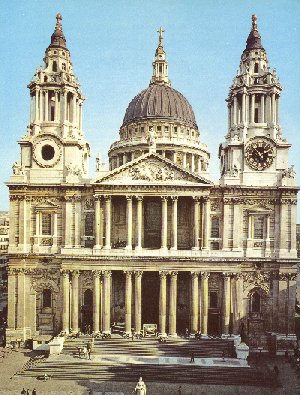
We arrived safely in London at 11:00 local time. We took the tube into the city, ate lunch off Picadilly Square, then took the tube to St. Paul's Cathedral and joined in the Evensong service at 3:15, about the time Sunday UBC-ers were gathered for worship at home. It was a beautiful contemplative service. We're in the Heathrow Airport now, waiting to board our flight to Entebbe in about 45 minutes. Thanks for your prayers. I'll check in when I can.

rrc

Saturday, June 11, 2005

Father-Daughter Dance


Posted by Hello

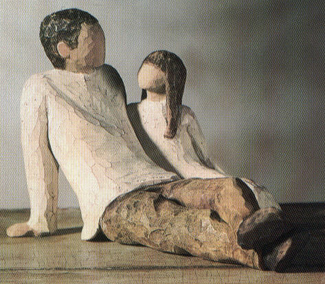
Last night I did something, for the second time in three years, that would have been unthinkable to a Baptist pastor a mere generation ago (and I’m sure to many now). I danced. The word itself used to drip of sin. I joined Jenna in the father-daughter dance at her recital, in a church.

Now, to say I actually “danced” would be like saying I “built the sandcastle” in the AIA Sandcastle Competition, or “flew the L-39.” I’m not losing touch with reality. In one case I moved the stick around while a professional sat two feet away ready to yank it from my hands in a split second. In the other, I hauled orange Home Depot buckets of salt water from the Gulf of Mexico and shoveled sand. In this case, I tried to be standing in the right place doing the right things while my graceful daughter danced around me with Simon & Garfunkel’s Bridge Over Troubled Water playing in the background.

I was present and participated. But to say I “danced” would be an exaggeration. (My goal was not to fall on my butt like I did at rehearsal on Monday. And not to grimace in fear while I did my part.)

“Walk down the aisle when the interlude begins. Stand at the foot of the stage while she runs over and puts her hands on your shoulders and extends one leg backwards like an ice skater gliding across the rink. When she leaves, go up the stairs and (gulp) onto the stage. Kneel and wait for her to run to you and put her foot on your leg, then hold her waist while she poses again, both arms and one foot extended (hers, not yours). Don’t drop her. Get up (the knees!), hold her hands while she twirls into you, let go of the left hand, then away. Follow her and hold her waist while she strikes another elegant pose. Then hold on to her waist and stay up with her as she runs across the stage (don’t trip!). Wait for her while she and the other dancing daughters meet together in center stage. They’re turning out now. Ready. She’s running to you. Dip down a bit, because you’re taller than she is. She is going to jump and you must catch her on your hip and spin around with her. If you make this, you’re clear. Here she comes…up… good… around…excellent. Let her down. Now the other dads and daughters are arriving on stage. Kneel. She balances with one hand on your shoulder. Lights down. Applause. Up (the knees!).”


But Jenna danced. Elegant, strong, graceful, beautiful. I was taken by it. I found it hard to concentrate on my part. Actually the father-daughter dance began for us thirteen years ago. I was the only male in the delivery room at the Woman’s Hospital of Texas on January 31, 1992 when she arrived. We’ve been dancing ever since, and in pretty much the same way. I’ve tried to be at the right place at the right time doing the right things while she flowed around me.

After watching Shall We Dance? a few weeks ago, and then seeing Dancing with the Stars on television this week, I suggested to Melinda that perhaps we should take ballroom dancing lessons when we get back from Africa. She said she thought she was not tall enough. Jenna looked at me, rolled her eyes, and said, “I don’t think your height will be your biggest problem.”

Father’s are often in big trouble when daughters arrive. I recall that Jack Bolt, father of three I think, stopped me at church the first Sunday after Jenna was born. “You better drown her today,” he advised. “After three or four days they really start to grow on you.” I did not take his advice, but I heard his heart.

We danced close when Jenna was small. I held her at every opportunity. I sat her in my lap and teased her with ice cream, her wide open mouth following the spoon patiently while I circled it over her head. While still a toddler she used to respond to the question, “Where’s your Daddy?” by lifting her little finger and twirling it around. That hasn’t changed much.

We’ve danced through rituals, which she loved as a child. We had a good-bye ritual we went through each morning as I headed for work, a litany of six or seven lines we recited each day. And a good night ritual continued until only recently with another half-dozen liturgical lines and kisses. We have danced with board games, family vacations, and a ton of books we have read aloud together. We have danced with worship and ministry and missions together. We have danced through family pain and loss. We have danced with lots of laughter. Not all of it has felt as awkward as the recital.

Last night, however, I danced not with a child, but a growing adolescent, a young woman who is someday going to dance away. That’s almost impossible to imagine. You hold them in the delivery room, blink your eyes, and they’ve grown. The father-daughter dance will still go on for a time, but not for a long time, I expect.

My prayer is that she learn to dance to that music that her Creator has placed in her heart, to the rhythm of joy and love and redemption that is found in Christ. I will be there to watch and to hold her up when she needs me to. I’ll still try to be in the right place at the right time doing the right thing, as clumsy as I may be.

And now I’m preparing to learn another dance, the grandfather-granddaughter dance. (Hopefully that will never have to be performed on-stage.) The dance is scheduled to begin in August when two young ladies arrive and I prepare to be smitten again. And I get to watch my sons begin the father-daughter dance themselves.

Life is good.

Thursday, June 09, 2005

Sabbatical Reading


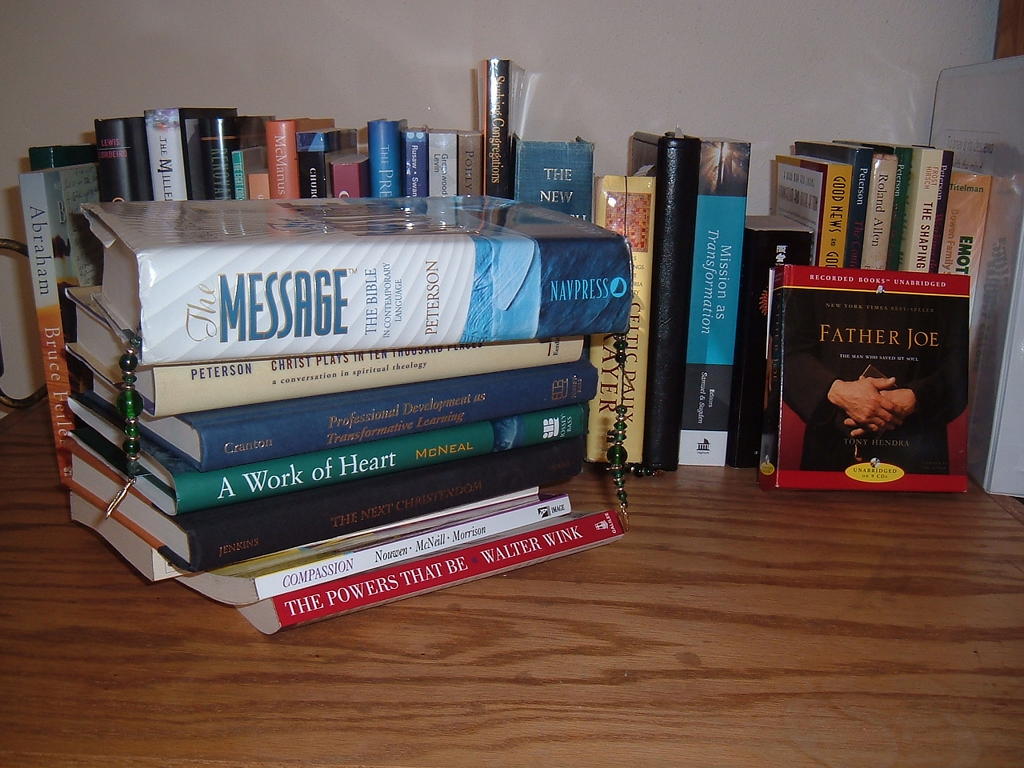
When I packed up things from my study to see me through three months of sabbatical, I hauled a stack of books home. Mostly these are books I’ve collected since January in anticipation of having some extra time for reading from April through July. I always overestimate how much reading I can actually get done. I’ve been know to take five books with me on an overnight trip. And I did it again.

Armed with more than thirty “must reads” I entered the sabbatical months. Of course, my dreams of having entire days to sit and read, sip coffee, and think were just that -- dreams. The first three weeks involved a frantic effort to finish a home remodeling project upstairs that had begun in early December. We managed that. During long days of painting, laying flooring, and nailing up trim work I did little reading. However, I had purchased an audio book I listened to – Tony Hendra’s New York Times Best-Seller, Father Joe: The Man Who Saved My Soul. Hendra tells a moving story of his life-long relationship with “Father Joe,” an unusual Benedictine monk whose spiritual vision and direction saw this wayward soul through a struggling adolescence, a failed marriage, substance abuse, and a quest for meaning. Father Joe is a compassionate saint. That the book sold so many copies may indicate the spiritual hunger of a wayward generation.

Traveling to Mexico filled most of the next two weeks with more activity. Reading was done in the cracks of time that could be found in the early mornings, mostly. The fare was a little heavier. I read Philip Jenkins, The Next Christendom: The Coming of Global Christianity (Oxford, 2002). Jenkins is a historian who details a fascinating scenario of Christianity in our world. He demonstrates the ways in which Christianity is spreading rapidly in many places, with the result that it is moving south (away from Europe and North America as centers) and is becoming darker (African, Latin American, Asian). The “average Christian” today should be thought of as a woman living in a Nigerian village or a Brazilian favela. This shift from the Western and Northern Hemispheres to the Southern and Eastern ones is almost invisible to most Northern Christians. We still speak glibly of what “Christians think” or of what “most Christians believe” as if we represented the church in the world. Contrary to what we hear in the news, Islam is not on the verge of taking over the world. In Africa, Asia, and Latin America Christianity is making huge strides, and not because of the work of Western missionaries. In fact, Christians from the South may soon be working hard to evangelize North America.

When I got home three weeks ago, I had assignments to prepare for the journey to Africa and Thailand. That has kept me occupied during the day. But I have found the time to read a couple of other books that challenged my thinking. At Melinda’s recommendation, I read Sue Monk Kidd’s The Dance of the Dissident Daughter. I had read her Secret Life of Bees last year. Bees is a novel, and a good story. Dance is her spiritual autobiography. Monk tells of her journey from being reared in a Southern Baptist Church in the Deep South to her present understanding of the spiritual life in terms that incorporate a feminist spirituality. She rightly exposes the patriarchal system that has for millennia treated women as less than men, and deals with her own struggle against that system, especially in the church. I’ll probably read her new novel, The Mermaid Chair, before the summer is over. It is a fictional account of that same journey, I gather.

Today I will finish reading Walter Wink’s The Powers that Be. Wink is a biblical scholar who has produced a series of thorough studies on the power structures of our world: Naming the Powers: The Language of Power in the New Testament; Unmasking the Powers: The Invisible Forces that Determine Human Existence; Engaging the Powers: Discernment and Resistance in a World of Domination; and When the Powers Fall: Reconciliation in the Healing of Nations. I own these, but have not read them yet. They were not even in the stack of thirty I set aside for the summer. The Powers That Be is a popular summary of the ideas in the others. Wink exposes the way that human institutions inevitably fall to the myth of redemptive violence. We grow up believing that violence is the solution to our problems. It shows up everywhere, from abuse in homes, to the patriarchal system Monk wrote about, to conflict in the Middle East. He lays alongside that cultural myth the teaching of Jesus on non-violence (not non-resistance or passive-ism) and offers it as Jesus’ “third way” (between violence and passivity). He demonstrates how it has been an effective way of bringing change in many parts of our world, especially in the 20th century.

Along the way I have read “in” a couple of others that I hope to finish soon. Henri Nouwen’s Compassion: A Reflection on the Christian Life is a powerful one. He calls us to compassion through a life of obedience. Since God is the God of compassion, since God already has compassion on the hurts of people, we are simply called to live in relationship and obey God. As we do, we become expressions of God’s compassion in the world. But the challenge is to live with a responsive and listening relationship to God. Also, Nouwen insists, compassion is something we do together, in community. None of us can be the compassion of Christ to the entire world, to all its hurts, to all its needs. We do it together. I have only a couple of chapters left in this one.

Last fall I was given a copy of Sabbath: Finding Rest, Renewal and Delight in Our Busy Lives, by Wayne Muller. It has thirty-five short chapters with suggested exercises at the end of each. I’ve been reading a couple of chapters each week this spring. I’m about half-way through. I recommend it.

I have read about a third of Reggie McNeal’s A Work of Heart: Understanding How God Shapes Spiritual Leaders. He reviews the lives of Moses, David, Paul, and Jesus and identifies six influences that God uses to shape leaders’ lives: Culture (the times and environment in which one is raised), Call (the leader’s personal sense of call by God to mission), Community (the people who shape and sustain the leader), Communion (the leader’s personal relationship with God), Conflict (the leader’s engagement of destructive forces in life and ministry), and Commonplace (the daily choices of living). McNeal underscores that God creates leaders to share his heart with his people. So the spiritual formation of a leader’s life is not a private matter. It impacts the leader’s constellation of followers and extends beyond the leader’s own life and lifetime.

One other read this summer is Patricia Cranton’s Professional Development as Transformative Learning: New Perspectives for Teachers of Adults. She calls professional teachers (I’m reading it as “pastors”) to be involved in a self-directed program of “transformative learning.” Cranton teaches a path of constant reflection on our work and revision of our processes. It is a bit dry, but helpful.

And I continue my way through the Bible with you, reading Eugene Peterson’s paraphrase, The Message.

So what’s in the stack that may or may not make it by August? In no particular order, just the way they are lined up on my shelf:

Ed Friedman, Friedman’s Fables
Bruce Feiler, Abraham: A Journey to the Heart of Three Faiths
Kegan Lahey, How the Way We Talk Can Change the Way We Work
Robert Lewis & Wayne Cordiero, Culture Shift: Transforming Your Church From the Inside Out
M. Rex Miller, The Millennium Matrix: Reclaiming the Past, Reframing the Future of the Church
Don Miller, Blue Like Jazz (because everyone I know is reading it)
Dallas Willard, Renovation of the Heart (a re-read)
Roberta Gilbert, The Eight Concepts of Bowen Theory
Tetsunao Yamamori and C. Rene Padilla, eds., The Local Church, Agent of Transformation: An Ecclesiology for Integral Mission
Erwin McManus, An Unstoppable Force: Daring to Become the Church GOD Had in Mind
Ronald J. Sider, Philip N. Olson, & Heidi Holland Unruh, Churches That Make a Difference: Reaching Your Community with Good News and Good Works
Eddie Gibbs, Church Next: Quantum Changes in How We Do Ministry
Ken Pohly, Tranforming the Rough Places
Ronald Sider, Good News and Good Works
Vinay Samuel & Chris Sugden, Mission as Transformation: A Theology of the Whole Gospel
Roland Allen, The Spontaneous Expansion of the Church (a book written about a hundred years before its time. I read it in seminary and need to read it again)
Michael Frost & Alan Hirsch, The Shaping of Things to Come: Innovation and Mission for the 21st Century Church
Eugene Peterson, Christ Plays in Ten Thousand Places: A Conversation in Spiritual Theology (the latest by one of my favorites)
Gary Jennings, Aztec (historical fiction that unpacks some of the Indian culture we saw in Mexico)
John Grisham, The Broker (because I’ve read all of his others)

I’ll post on them as I finish them. But unless Amazon.com goes out of business in the next couple of months, I’ll probably just be adding to the shelf.


Blessings,
rrc

Sunday, June 05, 2005

Architectural Sandcastles


Posted by Hello

Another first for me – participating in the American Institute of Architects highly competitive sandcastle competition on Galveston beach. It is a bit of an exaggeration to say I “participated.” Melinda and I showed up to see our son Alan’s project. He works for James Ray Architects. And he and Jim Ray were there to build their work of art. Their initial design had some flaws, so they decided the night before to switch and produce a manhole cover. Since their workforce consisted of only Alan and Jim, and Kathryn, my daughter-in-law who is soon to deliver, Melinda and I pitched in by hauling some water, walking on the site to pack it down, and throwing some sand around. A couple of other more skilled hands eventually showed up.

I did get to wear a yellow wrist band and received a free floppy-hat from one of the vendors. Eighty four teams were competing in several categories. They each had only eight hours to transform ten cubic yards of sand into their vision. Pretty amazing, really. The sewer manhole idea was a bit of an environmental sarcasm, I think, Galveston Bay being what it is.

I have never been on the beach with so many thousands of people. The swim suit police should have been handing out tee shirts to some of the folks there. No one really wants to see what some of the people were sharing with the world.

Sandcastle art is so fleeting. Even with the 24 hour guard that Galveston provided to protect the displays through Sunday, they will all perish. The wind, the tides, gravity, human destructiveness will cause everyone of them to return to their former state of mere sand.

Here we are, works of art – God’s handiwork (poesis) according to Ephesians 2. But we are fragile and short-lived. Formed of the dust of the ground, we are destined to return to dust. Life is brief and fleeting. Scripture says we are vapors that appear for a short time and then vanish. We are compared to the weeds of the field that floursh, blossom, and then perish. Life is brief at its best.

This week I spoke with a young man whose father, my age, is facing the last few weeks of his life in a bout with cancer. He wanted help with planning a funeral, but it is likely his dad will be gone before I’m back from Africa.

The observation of our human fragility and mortality is not threatening to me, however. I confess with millions before me and millions around me the truth that “I believe in the resurrection of the dead and the life everlasting.” That is a truth that has become more, not less, real to me over the years. The reason I confess that hope is because of an earlier portion of the ancient creed:


I believe in God, the Father almighty, creator of heaven and
earth.
I believe in Jesus Christ, his only Son, our Lord.
He was conceived by the power of the Holy Spirit and born of the
Virgin Mary.
He suffered under Pontius Pilate, was crucified, died, and was
buried.
He descended to the dead.
On the third day he rose again.
He ascended into heaven,and is seated at the right hand of the
Father.
He will come again to judge the living and the dead.


These are not mere words to me. They are the combined corporate experience of disciples of Jesus over centuries. As Rich Mullins put it: “I believe what I believe is what makes me who I am. I did not make it, no it is making me. It is the very truth of God and not the invention of any man.”

So the works of human hands amaze us for the moment, but they will perish. The glory of human lives attracts us, but it will fade. The beauty of human beings enchants us, but it will disappear. Like sandcastles.

What will last will be that which has connected with God through Jesus Christ. I want to live toward that.

Thursday, June 02, 2005

Fixed On Africa


Posted by Hello
“Fix” is a strange word. It can mean to repair something. You can fix your car when it is broken. It can mean to prepare something. You can fix your dinner, even if it is not broken. And it can mean to put something solidly in place, literally or metaphorically. A piece of furniture can be fixed to the floor or an idea can be fixed in your mind. You can have a fixed price on an item at a garage sale or the outcome of a basketball game can be fixed (which really means it’s broken). You can decide to get even with someone and say, “I’ll fix you.” You can have your pet cat fixed (and that is a good idea) and you can fix your eyes on something. You can fix atmospheric nitrogen by converting it to a stable form. You can fix a photographic print by treating it with chemicals so that it attains a permanent form. You can fix a biological specimen, such as a butterfly you’ve captured, so that it does not decay. Those are just its uses as a verb.

Fix is also a noun. You can be in a fix. You can get a fix on a distant object. You can get a chocolate fix (wait a minute, ok, I’m back). You can look for a quick fix to a problem. All that and more with just three letters.


Another use of the word intrigues me because it is part of my heritage. In Texas and other places in the South, you can be “fixing to do something” (pronounced: fick-sen + any infinitive). “Fixin’ to” is one of those Southern expressions many of us have grown up with. We know exactly what it means. It means to get ready, to prepare. “Fixin’ to,” along with “reckon” and “y’all” (plural, “all y’all) are part of the lingo of Texas, Mississippi, Alabama, and Georgia.


“Fixin’ to” means “to be about to do something; to plan to imminently.” But the 'plan' sense does not necessarily involve any preparation. It could mean “to be thinking about doing something,” as in:
“Honey, take the garbage out.”
“I’m fixin’ to.” (
Or, in some places, "I'm a fixin' to.")
“I’m fixin' to feed the chickens" could go with either sense. However, an expression like "It's fixin' to rain" could only go with the "be about to" sense. I read that the expression first shows up in the 1930s. Folks in the South Atlantic and Gulf states use it most, and only used with actions that are going to happen immediately: you wouldn't say, "I'm fixing to get married in five or ten years." If you're fixing to get married, you better put out your cigarette and go on inside the church.

Well, I’m fixin’ to go to Africa and Thailand. That means, in this case, that I’m getting ready. Getting ready is involving lots of practical details: packing lists, visas, airline tickets, arranging for the house and dog to be cared for, taking the car to my son, and a hundred others laundry list items. It is also involving getting together presentations for a group of African village pastors (9 hours on biblical interpretation), a group of African university students (five sessions on understanding the Bible), and a group of American missionaries (caring for your own soul). Others who are making the trip have their own lists of things to do and people on the other side of the world are getting ready, because we are fixing to come. Then, a few weeks from now I’ll begin to make new preparations because I’ll be fixing to come back home.

I am struck with how much of our lives are lived in preparation for something. We begin each day by preparing to go out and end each day by preparing for bed. From the time we are in kindergarten we are living in a mode of preparation. Even when we have finished our education and begun a career, we are constantly preparing for something. We prepare for a wedding and a marriage. We prepare to move. Three times Melinda and I have prepared to receive a new child into our lives, buying the necessities, rearranging our home, getting necessary medical care. Now we are fixing to have two grandchildren.

Preparation is a part of God’s work. Moses prepared 80 years for a 40 year work. Jesus prepared 30 years for three years of ministry. Paul prepared in the deserts of Arabia. The stones in Solomon’s Temple were prepared by the stone cutters in the quarry so that the noise of the hammer and chisel would not be heard in the Temple. They were made to slide into place.

Almost everything we experience seems to be preparation for something else. God is constantly readying us for further service. Do you see the preparations going on in your life right now? Do you see the preparations God is making in our church? He is fixing to do something in your life, in our lives.

One thing we seldom think about, because of fear or because we regard it as morbid, is that we are fixing to die. Or at least we should be. Living this life really is preparation for something more. (Now I would also make the case that this life is not a dress rehearsal or a practice round, but is the real thing and should be taken seriously each and every day.) But this life is not all there is and we are human becomings who are fixing to live forever. We ought to be getting ready.

I reckon that’s all the musings I’ll offer all y’all for now. I’m fixing to study.
rrc