Saturday, July 02, 2005

Tales from the Journey


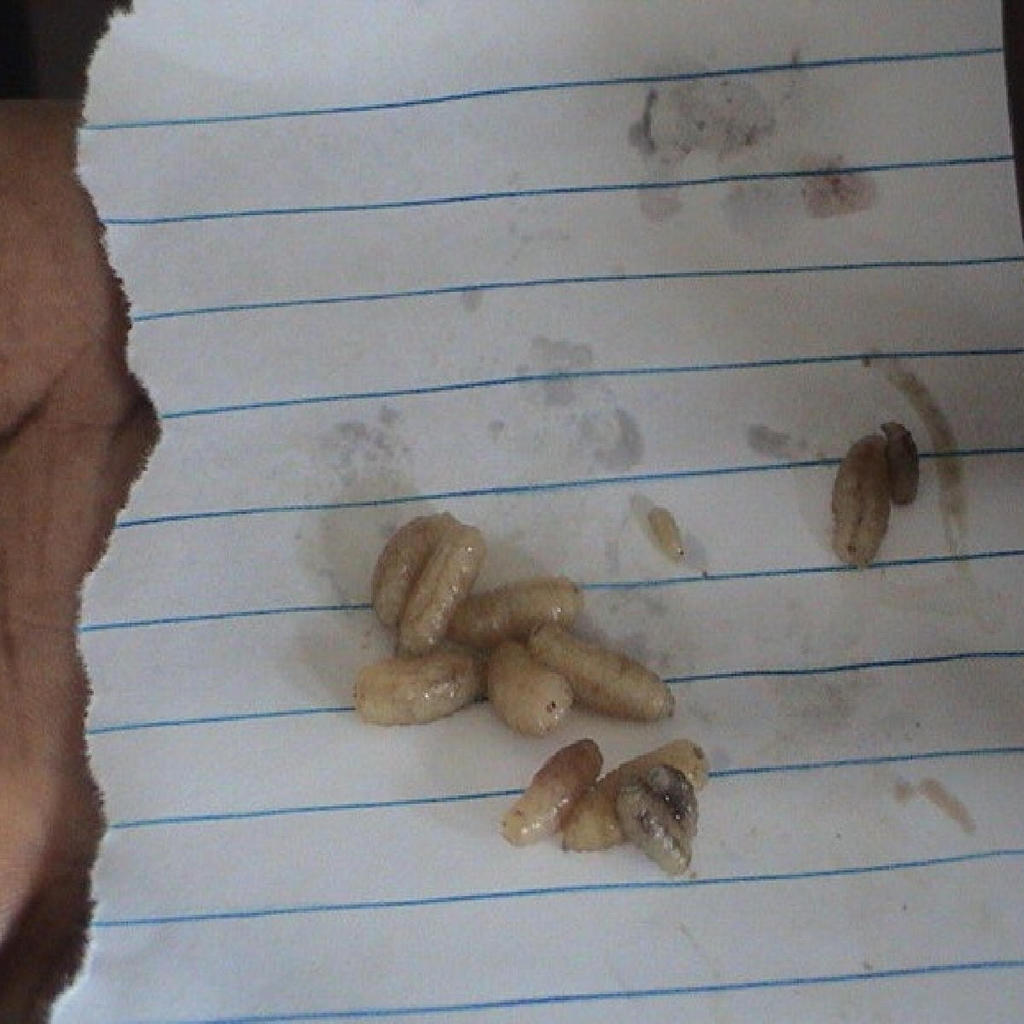
In the beginning, God created all manner of crawling and flying things, including the African tumbu fly, known in Uganda as the mango fly. I suppose, like all of God’s creatures, the tumbu fly has a role to play in the intricate ecology of this magnificent planet. Perhaps it pollinates the mango tree and helps it to produce the delicious, peach-like fruit. I don’t really know about that, I’m just taking a guess. But surely it has some purpose beyond causing myiasis in human beings.

“Myiasis” means the invasion or infestation of bodily tissues or cavities by larvae of flying insects. It is not an attractive sounding experience. One of the common causes of myiasis in Africa is the tumbu fly. It has a nasty habit of laying its eggs on the clothing of human beings. That often happens while laundry is drying outdoors.

The problem is not that you have insect eggs on your clothes. You’d probably never notice that. The issue with the tumbu flies is that the larvae emerge and burrow into your skin when the clothes are worn. You don’t notice that so much. They must be really small. But then, inside your skin, they start to grow. This is where it starts to sound like the movie “Alien,” or that scene in “The Matrix” where they inject that electronic insect thing into Neo. As the maggot grows, feeding on your flesh and blood, it creates a large, nasty boil in a couple of days. It’s sometimes possible to identify the maggots’ breathing tubes as two black dots in the boils. The sore begins to ooze some combination of pus and larva feces. Supposedly they are only hitching a ride for a while, and when they mature they emerge to change into a fly, leaving no permanent damage. I don’t think you really want to wait for that, however.

So when you see the boil, you can coat it with something like Vaseline, or triple-antibiotic ointment. That keeps air from getting to the worm, and it starts to suffocate. So it backs out looking for oxygen. That’s when you can use a needle and mash the tender boil really hard and force the maggot out. The sore will heal up in a day or so.

That’s what happened to me. Fortunately, the boil was on the calf of my right leg. I could think of other locations where the experience could have been much worse. The strange thing about this was the timing. One day we were sitting around talking about this very thing, and how people who hang out their laundry must iron every piece in order to destroy the eggs and keep this from happening. We all shivered at the description of the condition. Then the next day, this boil appeared on my leg. Dr. Pepper thought it might be a spider bite. But a couple of days later, in Durban, we removed the larva.

It is funny how things are in this world. Some little fly, just trying to do her job of pollinating mangos and reproducing, chooses to use your skin in the process, without asking permission. She has a part to play in the grand scheme of things, but causes some suffering to others along the way. I guess that I benefit from the little fly, because I enjoy eating mangos. (Their skin causes a horrible allergic reaction to Melinda, however, which happened in Oaxaca, but that’s another ecological puzzle.) We are like that, too, it seems. We play our part, try to contribute to the world, but even with the best effort on our part, we end up leaving suffering in our paths as well, often unintentionally. Paul saw that as the evidence of the fallen nature of all of the creation:

Romans 8:18-22 I consider that our present sufferings are not worth comparing with the glory that will be revealed in us. The creation waits in eager expectation for the sons of God to be revealed. For the creation was subjected to frustration, not by its own choice, but by the will of the one who subjected it, in hope that the creation itself will be liberated from its bondage to decay and brought into the glorious freedom of the children of God. We know that the whole creation has been groaning as in the pains of childbirth right up to the present time.
The remedy to all this is hope. We live with hope that someday, God will create a new heaven and a new earth. We will enjoy its beauty. And it will be marked by none of the suffering that mars this fallen world of ours. The mango flies will have to find some other means of reproducing. Or, if they use our legs it won’t hurt. I hope.

Wednesday, June 29, 2005

Durban Days


Durban, South Africa is more like Houston than it is like Uganda. I don’t know about rural South Africa. We are in the city – the big city. The metropolitan area of Durban includes as many people as Harris and the surrounding counties. It is located as far south of the Equator as Houston is north of it, and it is on the coast. The weather the past few days has been the equivalent of a normal Houston December. Refineries and ships make Durban the largest port in the southern hemisphere.

Unlike Houston, Durban is hilly, right up to the beach. This is a beautiful and lush place. The water system is one of the purest in the world, so we do not have to rely on the bottled stuff as we did in Uganda and Mexico. And unlike Houston, they don’t drink much coffee here. If you ask for coffee you are likely to be given instant Nescafe as if that were the same thing. British influence. I suppose the Brits would think nothing of asking for tea and being given Nestea. Right. I’ll be leaving here on the Fourth of July, the day we celebrate our Independence from King George and his tea. Serves them right.

The people we have met here have mostly been like the men and women you might meet in Clear Lake. They live fairly affluent lifestyles. They are business men and women, professionals. Some of them know Jesus and love him deeply. Others are seeking. Gary and Cheryl Price work with this people group.

On Monday evening we attended a dinner for business men and women at a beautiful country club. The dinner was delicious – roasted lamb, curried chicken, various vegetables. Patrick Forrester was one of two featured speakers that evening. He did an awesome job of sharing his work and his faith with the crowd of about two hundred. Approximately a third of those attending came as guests of their Christian friends and were not themselves believers. Patrick talked about the importance of finding balance and priority in one’s life and not letting work become your god.

Melinda was seated next to Errol, a colored man (That means not black and not white, sort of. Officially it is not a category any longer, since apartheid, but people still use those terms.). I only mention that he was “colored” because Errol was the first colored civil engineering student to graduate from the university here and he was in charge of building a major highway that allows large trucks access to the port. She asked him, “What do you love to do?” That’s a penetrating question. It gets to one’s heart. He replied honestly, “I guess I love to work. That’s what I do most of the time. Work. I don’t have time for much else.”

The other speaker was Brian Stocks, a very successful businessman here who has a rich testimony of coming to Christ and rearranging priorities in his own life. The two presentations complemented each other well. After the dinner, tea and biscuits (they are really cookies) were served and people were invited to stay to talk. Many stayed for more than an hour. Gary and his organization (Priority Associates, a ministry of Campus Crusade for Christ) will be following up with those who attended.

On Tuesday our team took a tour of the city of Durban with Gary and Noel, one of the elders in his church. We visited the Indian market and the large Indian section of town, where more than 250,000 Indians live. Wednesday Melinda, Diana, and Pamm went to lunch with some Zulu women, all of them teachers. The depth of the women's spirituality was impressive. Melinda came home wearing a colorful Zulu neckband they gave her. In the afternoon, we all visited the Durban beach for an hour or so. International surfing competition begins here on Friday. More than 100,000 people will be on the beach. Patrick spent the day speaking in four or five venues in the business community. We all enjoyed supper with our host families. Melinda and I played with Allison (age 3) and Lauren (age 10), practicing up on our grandparenting skills.

Today the team will drive to a game park about 2 hours north of Durban. We're supposed to see the "big five" (lions, elephants, rhinos, buffalo, and leopards, [oh, my]). The Forresters head home on Saturday. Pamm may be heading out on Tuesday. On Monday I take off for Thailand and Melinda and Jenna will be staying on in Durban for another week.

I'll write about my experience with a Mango fly later.

rrc

Checking in From South Africa

We arrived safely in Durban on Sunday night, and the team has been busy, especially Patrick and Pamm. We are staying in homes, so we are split up most of the day. Internet access has been limited here as well, although we are in a city that is much like Houston. I'm at an Internet cafe in a mall near the home where Melinda and I are staying, and I don't have much time. I will check in with a more detailed account tomorrow. Thanks for your prayers. Keep it up.

Saturday, June 25, 2005

Last Days in Uganda


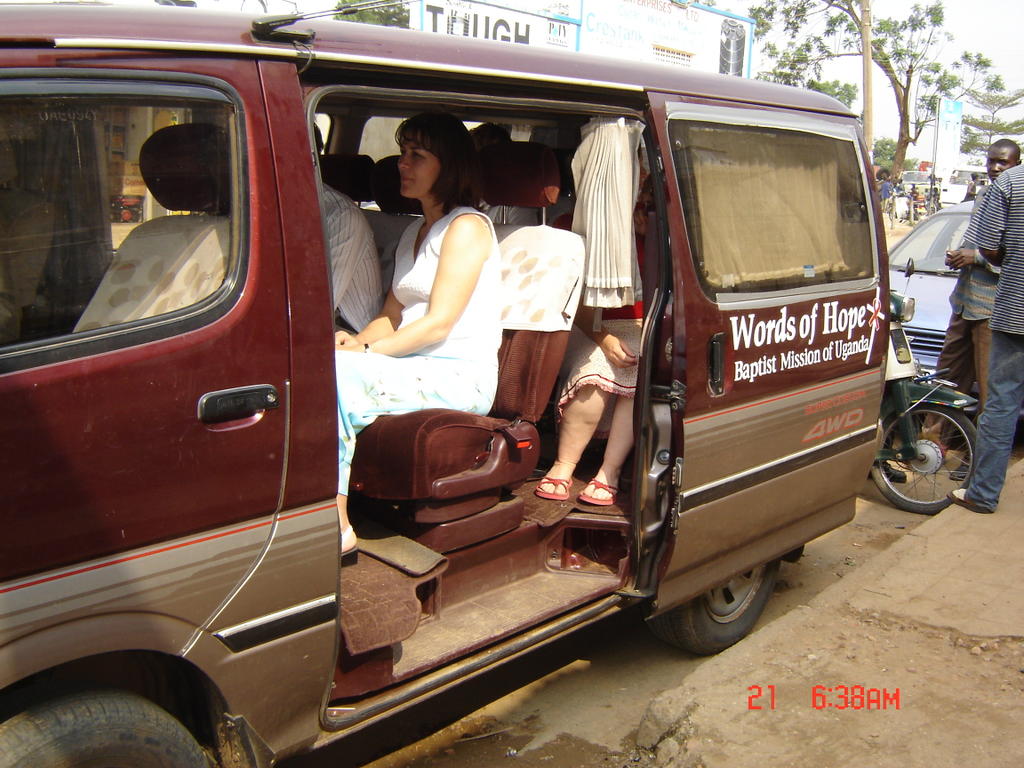
It is Saturday, our last day in Uganda. Patrick, Larry, Andrew and I just returned from a trip to the central market in downtown Mbarara. We left the women shopping. All of us rode downtown in Larry’s van, but the guys took picky-pickys (or boda bodas) back. Pickys are small motorcycles that are parked all over town. Mbarara has more than eight hundred of them. For 500 shillings (about thirty cents) they will take you anywhere in town.

This afternoon we will finish varnishing some benches we built for the church in Nakinombe, visit the hospital, and pack up for a 6:30 AM departure from Larry’s house tomorrow. We will make the five hour drive to Entebbe and take off for Durban about 3:30 PM. While Sunday morning worshippers gather at UBC, we will be in the air over Africa.

On Thursday I went with Sally, Adam, and Andrew to buy lumber to build the church benches. It was not exactly a trip to Lowe’s. The lumber was approximately a 1 X 9 and approximately 13 feet long. It was also approximately straight. Andrew and Adam did most of the cutting on Thursday and Patrick helped them assemble one prototype. On Friday morning, most of the team stayed and worked on the project. We cut and sanded the parts, built twenty and put two coats of varnish on them. Five feet long and eighteen inches high, they will serve as pews for a mud and stick church building. The cost was about four dollars per bench. A few of them now await the second coat of varnish.

Melinda worked at the church to complete the two worship banners she was guiding the students to make. One proclaims "We preach Christ crucified, the power and wisdom of God." The other, declares, "The leaves of the tree of life are for the healing of the nations." Each is an intricate design cut from ten foot pieces of Tyvek, donated by Dupont. Many hands, much work, and a lot of hours went into each of these, and they are beautiful.

Friday night was the T.G.I.F. program at the church. Each Friday the university students gather to eat popcorn, play table games, listen to music, and enjoy each other’s company. They usually have some sort of program as well. The program last night was Col. Patrick Forrester, who did an incredible job of sharing his life, the gospel, and explaining the work of a NASA astronaut. The students were enthralled, and asked questions until nearly 11:00 PM. Many stayed afterwards for more discussion.

After a visit to the hospital this afternoon, and some final work on the benches, we will pack our bags, eat dinner, and watch a movie. And tomorrow we will leave Uganda behind. But we will be taking some things with us. The up close and personal engagement with the poverty and needs of these beautiful people. The faces of a thousand children. A vision of the devastation of AIDS on the African continent. The memories of dozens of friendships forged by working together in acts of compassionate ministry: Naboth, Aloysius, Peace, Avas, Gerald, Mildred, Mary, Sam, and others. The partnership with American missionaries offering themselves on this field alongside Larry and Sally: Kari, Barry, Scarlett, and Debbie. The faces of the forty-seven village pastors who came to Mbarara to study last week: Ezra, George, Aloys, and their brothers. I will also take with me the intent to return to this place.

When the plane leaves the ground tomorrow afternoon, the team will attempt to shift gears as we prepare for a week of ministry in the more urban and westernized setting of Durban, South Africa. We will focus our minds and hearts on the partnership we will forge with Gary and Cheryl Price who are attempting to reach into the very secular culture of their city. Pray for us as the journey contines.

Wednesday, June 22, 2005

Blessed are the Poor


Luke 6:20-21 Looking at his disciples, he said: "Blessed are you who are poor for yours is the kingdom of God. Blessed are you who hunger now, for you will be satisfied. Blessed are you who weep now, for you will laugh.

Those are the words of Jesus. I know they are true, but not on any literal plane. The poor are not blessed just because they are poor. The hungry have no blessing inherent to their hunger. You look into their eyes and you know that it is so. Those poor and hungry I have met who have discovered life in the kingdom of God, however, do know and express a blessedness to their life that is remarkable.

Yesterday in the village of Kiyanja (chee-YAN-jah) I sat in the combination home and store of a young woman named Ruth. She is an AIDS patient. Her "store" was a small room from which she sold used clothing and did some sewing. Her bed, no more than a cot really, is in the front of the room, near the window. She is tired and weak from the disease and is losing weight. The rent on the building strains her ability to provide for herself and her five children.

On the wall hangs a sign that says, "Jesus is the Answer." When I asked her about that, light returned to her eyes and she affirmed that she has become a follower of Jesus. She says she depends on the presence and strength of God in her life to live each day, and I believe her. I offered to pray for this sister in Christ and she said, "Pray for me to know peace. Pray for me to have strength. Pray for me to have enough to feed my children." Ruth is blessed, not by her poverty, but in spite of it.

Harriet lives a half mile from Ruth’s shop, just down the highway that runs from Mbarara to Busheyni. Jenna and I walked to Harriet’s home, accompanied by our guide and translator for the day, a 40 year old woman with bright eyes and a ready smile, named "Peace." Peace took the opportunity to teach us as we walked, asking us to repeat common greetings in Runyankore, or pointing out the people digging through the tall grass with their fingers, "They are looking for mushrooms." She bent down and picked up a handkerchief full of the fungi someone had gathered. She told us of her life – daughter of an Anglican (Church of Uganda) pastor, coming to faith as a child, marrying an Independent Baptist pastor who now serves in the Church of Uganda, and of her sense of calling to work with HIV/AIDS patients through Words of Hope.

Harriet’s home is a mud hut located behind a better looking house. I suppose a half-dozen of the mud structures were back there. A man stepped out of one of them as we approached, offering us the same hospitality we have found in each place: "You are welcome!" Peace called for Harriet and she came to the door of her place and quickly invited us in. Another 8’X10’ house like others we’d been in. A sheet draped over a rope divided it into two rooms. Harriet had a bed in one corner and a simple bench against the wall. She offered Peace the bed as a place to sit and insisted that Jenna and I take the bench. Harriet sat on the floor.

We asked about her health and how she was doing managing the disease. She spoke of all she had to do and of her weariness and of the pains in here back and neck. She, too, was one of the blessed poor because she, too, knew life in the kingdom of God. Harriet talked about her faith. When we asked her how we could pray with her, she asked prayer for strength and for her poverty.

We attempted two other visits that morning, but found no one at home. So the three of us looked for a place to sit and await our ride back home. The Heavy Duty Bakery was next to Ruth’s shop. The bakery’s front door was propped open by a small bench. We asked the owner if we cold use the bench while we waited. He offered it gladly.

We sat for an hour. Three small poor children played around us, teasing each other or chasing the two chickens that were running loose. Lunch time was approaching and the aromas coming out of the bakery door made my mouth water. But I did not have any money with me. Not a penny. I watched people come and go right in front of my face. They arrived on foot, on bicycles, or on bodas (small motorcylcles used as a taxi service). They walked past us, into the bakery, and came out with bags of rolls or loaves of bread. My hunger grew as I saw the food and breathed in the smell. But I had not a penny to buy anything. A moment of hunger and poverty. But not a life of it.

The stories could be multiplied, you know that. But is there really anything I can do other than feel sad about their condition or guilty for all that I have? Yes, there is.

You can act on a personal level. Compassion International is a reputable organization that provides support for poor children in nations around the world. Most of the money actually gets to the recipient. Sponsoring a child is one personal touch. (Our family sponsors a young teen-age girl in Uganda.)

You can act on a social or political level. We Americans imagine ourselves a generous people. Yet less than one percent of our national budget is shared with the poor of the world in the form of humanitarian aid. A movement is afoot to change that. The movement is called ONE. It calls on our President and Congress to take several concrete actions, including allocating an additional one percent of our budget to address the issues of poverty in Africa. ONE is supported by a variety of individuals and organizations, including well-known Christian leaders and Christian ministries. You can click on the link in the right column and visit the ONE website. You can sign a petition that requests our President to act.

What difference would anadditional ONE percent of our budget make?

With an additional ONE percent of our budget:

  • We can help prevent 10 million children from becoming AIDS orphans
  • We can help get 104 million children into grade school. 30 million girls in sub-Saharan Africa don’t have access to schools. Getting girls into school is one of the best ways to improve their futures, their health and the health of their families.
  • We can help provide water to almost 900 million people around the globe.
  • We can save almost 6.5 million children under 5 from dying of diseases that could be prevented with low-cost measures like vaccination or a well for clean water.

ONE percent of the U.S. budget is $25 billion. (You might recall the President asking for an additional $80 billion last January to continue the war in Iraq). Redirecting that much money would have to be done over time. Directed to honest governments, private charities and faith-based organizations, this support would provide the tools and resources they need to really make a difference. American support would be part of a compact with poor countries who fight corruption and use their own resources to help their people out of poverty. American leadership would be an example for rich countries in Europe and Asia to do their share to help the poorest people in the world. This is actually something that could be done in this generation.

You can act on a spiritual level. Pray for the leaders of the eight richest industrialized countries in the world when they gather next month at Gleneagles, Scotland in the G-8 Summit. The United States, Britain, France, Germany, Italy, Canada, Japan and Russia will consider forgiving more than $16 billion in debt owed by many developing nations, mostly in Africa.

This past weekend I preached for the first time since mid-April. My text was a saying of Jesus recorded, not in any of the four Gospels, but in the Book of Acts. The apostle Paul, speaking to the leaders of the churches in Ephesus, says: "In everything I did, I showed you that by this kind of hard work we must help the weak, remembering the words the Lord Jesus himself said: 'It is more blessed to give than to receive.’" (Acts 20:35). Pray that those who have so richly received will do the hard work of helping the weak, experiencing the truth of Jesus’ teaching, the more blessed state of giving. And pray that we, as a church, might live with this same spirit.

"Blessed are you poor," said Jesus, "because yours is the Kingdom of Heaven." The Kingdom is theirs, not because they are poor, but in spite of the fact. And so they are blessed.

"And blessed," said Jesus, "are those who give." They are even more blessed than those who receive.

Blessings,

rrc

Tuesday, June 21, 2005

AIDS and Africa


You don’t hear so much about AIDS in the U.S. anymore. Not that it’s gone, it’s just not news the way that it was. You’d think we’d found the cure for it, like polio or smallpox, but we haven’t. It is still there. Sixty thousand new HIV infections a year. For a while, from the amount of coverage the disease received, you would have thought that it was threatening the future of our country. In reality, HIV infection affects about one person in three hundred in the U.S. We have fourteen times as many alcoholics in the population. More people die each year in the U.S. from cancer (500,000) or heart disease (750,000) than have died of AIDS since it was first diagnosed here (430,000). For us, HIV/AIDS became a political issue, associated with the homosexual community. I say that not to downplay the seriousness of the issue in the U.S., but to compare what we experience to what is happening here in Africa. Unfortunately, compassion does not run deep for the issue, even (or sometimes, especially) among Christians.

For the people of Uganda, and much of Africa, the issue is different. HIV/AIDS cannot be ignored here. It is everywhere. Billboards and posters remind people of the need for sexual abstinence and for faithfulness in marriage. Funerals take people away from work daily as family members succumb to the disease. Children, often infected when they enter the world, are left to raise themselves and their siblings as their parents die young. Husbands die leaving their wife (wives) to fend for themselves in a world that is not especially friendly to women. Infected by their husbands, they are damaged goods. No man will have them. Google "AIDS in Africa" for lots of information, or for a moving, but dated Time Magazine piece, CLICK HERE.

Uganda is one of the success stories. At one point, 18% of the population was HIV+. Now it is down to 6% (eighteen times the rate of the U.S.). In Botswana, half the population is HIV+, 150 times the rate in the U.S.) . In countries of southern Africa, the numbers run around 24-33% (68-99 X U.S.).

The AIDS clinic at the Mbarara University Hospital where Larry Pepper works serves 6500 patients a month. Words of Hope is a ministry that the University Baptist Church, Mbarara, has developed to address the physical and spiritual needs of the clients of that clinic. Teams of visitors go out daily to find patients in their village homes. They inquire about their health, about their needs, and share with them the hope of the gospel.

On Monday I had my first opportunity to participate in the Words of Hope ministry. I accompanied Naboth, a Ugandan pastor, and Aloysius, a seminary student, on an afternoon visit. We traveled in Naboth’s small pickup truck. Aloysius rode in the back. Naboth drove us five or six miles out into a country village to pick up a man who would help us. He is a soldier in the Ugandan army and we were going to go onto the local military base to visit. "Dirt poor" does not describe the village. Dirt might have enriched the place.

We made our way back to the main highway and then to the army base. A few words from our "guide" and soldiers opened the big iron-barred gate for us to enter. We drove to the base hospital where several clients from the clinic had been, and possible still were, patients in the medical ward. A tall, muscular Ugandan captain wearing fatigues, black boots, a beret, and large, goggle-like glasses met us outside the hospital. Captain Richard is the administrator of the hospital. The man invited us into his office and listened as we explained our mission. He decided to help.

The Captain Richard took us to the hospital’s medical ward, a long room with rows of beds on either side. It was not full and it was relatively clean. He scanned the list of names we brought with us and told us that these men were no longer patients in the hospital, although they had recently been. He suggested that we might visit the TB ward. He thought one of them was there. A counselor from the hospital, a bright, well-educated officer, joined us.

The TB ward is located a quarter of a mile or so away from the other wards, so we walked across the base. In the distance you could hear the crack of rifle fire, as soldiers practiced their marksmanship. Squads of recruits jogged by chanting their cadence in Swahili. Children were everywhere. I’m certain many of them had never seen a white man (muzungu) up close. A pair of four or five year olds saw us coming. One of them became wide-eyed, not with curiosity, but with fear. (I later found out that in the villages children are often told that white people will eat them.) He behaved like he believed that. He ran as fast as he could, screaming. The soldiers with me laughed. I knelt down and invited the boys to me. One of them came and shook my hand. I told him to call his friend. The second boy came reluctantly. We exchanged the greeting that is common with school children learning English: "How are you?" "I am fine." Then I asked him, "What is your name?" I might as well have said, "Do you want me to fry you or boil you?" His eyes became wide again, he screamed and ran away.

At the TB ward we found one of the young men we were looking for. James is 18 and unmarried. Captain Richard located another of the clients, who had been discharged from the hospital and brought him to us. His name was also James. He is 29 and has a wife and three children. James the First spoke only Swahili. James the Second spoke Runyunkore. Aloysius engaged them in conversation, first about their medications and their physical conditions. We were standing beside a window in the cinderblock hospital ward. A steady flow of children’s faces appeared in the window as word spread that a white man was there.

Both James’ expressed a desire to talk about spiritual matters and Aloysius gave them copies of the Gospel of John and spoke to them of Christ and the hope that is available through him. Meanwhile, Captain Richard had located another client we were inquiring about, Captain Nathan, age 68. Captain Nathan has 27 children, 15 grandchildren, and who knows how many great-grandchildren. He is a 43 year veteran of the Ugandan army. The Captain enlisted back in 1962, shortly after Uganda received its independence from Great Britain. He has been a believer in Christ since 1991. He is infected with the HIV virus, as is his wife. At one point, as much as 75% of the army was HIV Positive.

Captain Nathan is an educated man who speaks several languages well. He became the translator for Aloysius, providing the gospel to James the First in his native Swahili. Both James’ expressed a desire to receive Christ. We prayed with them and encouraged them, and gave them some material to read. Others gathered around as the gospel was being shared and asked for copies of the Gospel of John as well. The young counselor, who had accompanied us, told us he was one of the ministers at a church located just a hundred meters from the barracks. He was enthusiastic about our being there for the soldiers.

Captain Nathan invited us to his home on the base to meet his wife and pray with her. We walked another half mile across the base. The quarters provided for the soldiers’ families were dozens of long cinderblock structures with tin roofs divided into very small rooms. Freshly laundered camouflaged fatigues hung everywhere. Half naked (you decide which half) children swarmed between the buildings. Shallow ditches flowed with sewage across our path. As we walked I asked him about his military service and his life. At one point I asked, "How many soldiers are on this base?" "That is a government secret," he told me. "I cannot tell you." Sorry.

The Captain’s home was one of these small dwellings, with a couple of rooms. We entered a room that was 8’x10’. Couches sat against the walls on the right and the left, a TV was located on the far wall and a chair on the near one. The walls were covered with pages from a newspaper and various small posters. This had been the Captain’s home for the past nine years. He grew a small vegetable garden out back.


We met Captain Nathan’s wife, and after a half-hour visit talking about everything from life in Uganda during Idi Amin’s reign of terror to life in Christ, we read scripture, prayed, and walked back to our pickup. Captain Nathan walked with us. He told us how much it meant to him for us to have come to see him and his wife. He said he was in his house when a messenger came telling him someone was asking for him at the hospital. When he came and found it was us pastors, he said he was very comforted. He asked us to return.

Patrick, Diana, and Andrew Forrester arrived at the Pepper’s home safe and sound around one o’clock. Patrick went to work right away. While I was on the army base, Col. Patrick Forrester was at one of the local high schools speaking to about 1200 students. He was well-received and his presence has opened a ministry at the school for Larry and his team that they have not had before.

Earlier in the day Melinda went with Barry and Joseph (a UBC member) to a Bible storying group Barry has begun at a local security guard company. At about 9:00 AM, when the guards get off-duty, they gather to hear Barry tell Bible stories. More than fifty men came on Monday. Barry told the story of creation and they listened and participated with the same enthusiasm shown by the people of the village last Wednesday.

Melinda and Jenna began a banner-making project with UBC members on Monday. They are creating two ten-foot horizontal paper-cut banners for the church this week. About 25 students showed up. Since they had more hands available to work than they had knives, the work was shared over the three hour period. They will meet each day from 12-3 to complete the projects.
Last night we held our second Bible study for the university students, dealing with principles of biblical interpretation. Pamm, Sally, Melinda, Barry, and Larry served as small-group discussion leaders. We gave Pat and Diana the first night off from small-group leadership, since they were freshly on the scene and still dazed by the travel. They enter active duty tonight (Tuesday). We returned to the Pepper’s home for a late dinner (Mexican food) and the Forrester’s were welcomed into the warm and joyful fellowship we have been sharing all week.


This morning some of us will go to a local village for Words of Hope visits and to invite people to the beginnings of a Bible storying group on Thursday. At noon the banner group will work. Tonight we will lead students in a study of how the Bible is used to help us with ethical decisions in our lives. God will provide other opportunities along the way.

AIDS is not going to go away. Not in Africa or in the U.S. As Larry tells his church and the pastors he trains, the enemy is not the people who are infected. The enemy is the virus, and the enemy is strong here, destroying lives of men, women, and children. The scope of the problem is overwhelming. Advances in treatment is prolonging life and raising its quality. Education is helping to reduce the problem in some places. But the tide has not come close to turning. The medical work Larry and his colleagues do is vital. But so are words of hope.

Sunday, June 19, 2005

The Place Where Compassion Grows


Matthew 4:18-25 As Jesus was walking beside the Sea of Galilee, he saw two brothers, Simon called Peter and his brother Andrew. They were casting a net into the lake, for they were fishermen. "Come, follow me," Jesus said, "and I will make you fishers of men." At once they left their nets and followed him. Going on from there, he saw two other brothers, James son of Zebedee and his brother John. They were in a boat with their father Zebedee, preparing their nets. Jesus called them, and immediately they left the boat and their father and followed him. Jesus went throughout Galilee, teaching in their synagogues, preaching the good news of the kingdom, and healing every disease and sickness among the people. News about him spread all over Syria, and people brought to him all who were ill with various diseases, those suffering severe pain, the demon-possessed, those having seizures, and the paralyzed, and he healed them. Large crowds from Galilee, the Decapolis, Jerusalem, Judea and the region across the Jordan followed him.


Friday and Saturday I visited a familiar place that was different than any place I have ever been before. It was familiar in that it was the place compassion grows. I have been there on other occasions. It is the place Jesus took his first disciples when he said, "Follow me." He took them to the place of human hurts and needs. He showed them that being in the midst of such needs is the place one goes when he follows Jesus. I have been there before.

But it was different than any place I’ve ever been. The medical clinic was set up in a small village outside of Lyantonde Town. Like the 4077th, five vehicles laden with supplies and twenty-seven people moved into Nakinombe (nachee-NOME-bay) and set up our operations at about 9:30 on Friday morning. The mud and stick church building was divided by ropes and bedsheets into a clinic with a triage area and four examining rooms. A blue plastic tarp spread its shade just outside the door for the registration and reception area. A screen shelter set up behind the church became the "evangelism room," where the gospel would be shared. A big, black ten gallon barrel with a spigot was set up outside for hand-washing. The back of the Toyota van was the mobile pharmacy. A mud pit latrine served as our restroom facilities. At the house next to the church a half-dozen women worked all day to prepare a single meal of matoke, posho, cabbage, rice, and beans for the group.

By 10:30 we were receiving the first of what would be 575 patients over two days. Business was slower on Friday (only 175) because of a funeral in the village. But it picked up the next day. We stopped registering patients at 1:30 PM on Saturday and began to turn people away. We continued to process those we had registered until 6:00 PM, and then we struck camp.

On Friday evening, after supper, when the sun went down, we set up a video projector and showed "The Jesus Film" to a crowd of two hundred or more, who sat on the ground and watched the movie until 10:30 PM, and then walked in the pitch black dark back to their huts.

We spent the night in tents, sleeping on the ground. The women’s tents were set up inside the church on the dirt floor that was covered with straw. They have no pews, so people sit on the floor. The men’s tents, and my family’s, were set up outside. The rocks under our tent floor were the size of my fist.


That was the setting and schedule, but I want to describe the experience. When the people began to arrive, they came in droves. They came with their disease and injury. Women came bearing their sick children in their arms and on their backs. One infant who had malaria was sent into Lyantonde to the hospital there, but the woman returned with the child’s corpse during the movie that evening. They came in the brightest colors you can imagine. Many came with deeply expressed gratitude for our being there. Women came out of their strong patriarchal culture and bowed to their knees before me, a man, a white man, to hand me their prescriptions. It was terribly uncomfortable. More so than the rocks in the bed.

I helped out in the pharmacy, mostly, where Melinda, Sally, and Jenna were the pharmacists, dispensing what the physicians had prescribed. People pressed into us with their needs and we gave what we had. Before the two days were completed, we were running low on supplies.

Pamm worked at the registration area, where patients were given a number and a piece of paper to carry through the process. Next they went to the triage area where their vital signs were taken and recorded and their complaint registered. Then, they saw a physician who examined them, diagnosed their condition, and prescribed treatment. They next went to the evangelism tent, heard a presentation of the gospel and received prayer. Thirty-five adult made commitments of life to Jesus Christ. Finally, they brought their prescription to the pharmacy to be filled. Once their prescription was ready, one of the medical students explained how to take the medication. Five hundred seventy five people went through this process with us in two days.


During all this, we had a flood of experiences. I walked across the road to a small mud hut. A medical student went with me to translate. We spoke with an old woman there, a Muslim, who was selling fried grasshoppers. Two Catholic women were with her. A couple of "born again" men were also there. We talked about God and his grace. She asked lots of questions about America ("Do you have tribes there?" "Do you have grasshoppers?") She expressed her gratitude to us for coming to bring healing to the people.

No one spoke much English in the village. Some of the children, who had studied in school could speak a bit, and enjoyed practicing it with us. A group of boys found Jenna enchanting. "Your daughter is beautiful." "How old does an African man have to be to come to America and look for a wife?" I could have gotten several cows for her had I wanted to. They enjoyed having their photos taken on a digital camera and then seeing their own faces.

A group of children gathered around the Toyota van on Friday evening to sing songs with Melinda, ask questions about America, and generally to be up close to a muzungu (white person, literally, "one who runs in circles"). This same group sat at Melinda’s feet during the film and wanted a running commentary: "Who is that man?" "Is that one Jesus?"

We finally left about 6:30 PM on Saturday. Men, women, and children lined the road and waved to us as we left. We left them with a few pills to rid them of worms, relieve their pain, and cure their infections. We left them with the good news that Jesus does know them, love them, and offer them life and hope. We left the village with a different view of the Baptist church that stood in their midst. Pastor Vianny and his wife Juliette will have their ministry strengthened. The church will have a chance to be more effective.

When we left we were spent. Our medical supplies were low. Our legs were tired from standing. We were dirty and dusty and hungry and sleepy. We had been to that place, that place Jesus takes his people, the place where compassion grows.

I tried to live as a person of prayer in the middle of that operation. Lacking both language skills and medical knowledge, I was in the role of "Radar" or "Klinger" to Larry’s "Colonel Potter." I could not do many of the things I would like to have done. So I decided I would pray for people as I walked among them or took their prescriptions and read their names. But that was a challenge. Things were so busy and hectic. I found compassion a difficult "feeling" to sustain. But I’m not certain compassion is a feeling. It is a response of obedience to the compassionate God who loves these people, who goes among them, and who says to us, "Follow me." I believe that the compassionate Christ was there, with those people, in the form of twenty-seven of his people who were willing to obey. Compassion sometimes takes the form of obedience.

Today (Sunday) I will preach in English without a translator at the University Baptist Church, Mbarara. This afternoon, Larry will drive alone to Entebbe to pick up Patrick, Diana, and Andrew Forrester on Monday morning at 5:30. Tonight Melinda, Pamm, and I will begin a Bible study with university students on understanding the Bible. Tomorrow’s activities are not all certain. We may purchase some lumber so that Adam Pepper and Andrew might build some benches for the church in Nakinombe. That would be a compassionate thing to do. Patrick will be speaking to a high school at 5:00 PM (10:00 AM Houston) or so (after having arrived at 5:30 AM on a long flight). Pray for him. In the evening we’ll be doing the student Bible study again. More later.

Blessings,
rrc